THE BASICS
In Vermont, we have an opportunity to create our own clean heating and cooling systems.
We don’t have to rely on importing fuels from out of state or install air source heat pumps in every building. Including Thermal Energy Networks in our mix of solutions can bring multiple benefits to many of our communities, including making energy bills more affordable, increasing resilience, reducing electric grid peaks, and bringing safe, clean thermal energy to our homes, schools, businesses, and public spaces.
You may already know how a geothermal system works for an individual home:

When you turn on your heat, the ground source heat pump inside your house compresses warmth drawn from underground into heat, then circulates it around your home to keep you comfortable.
When you need cooling, the process reverses. The same heat pump extracts heat from inside, returning it to the earth and cooling your home.
What is a Thermal Energy Network?
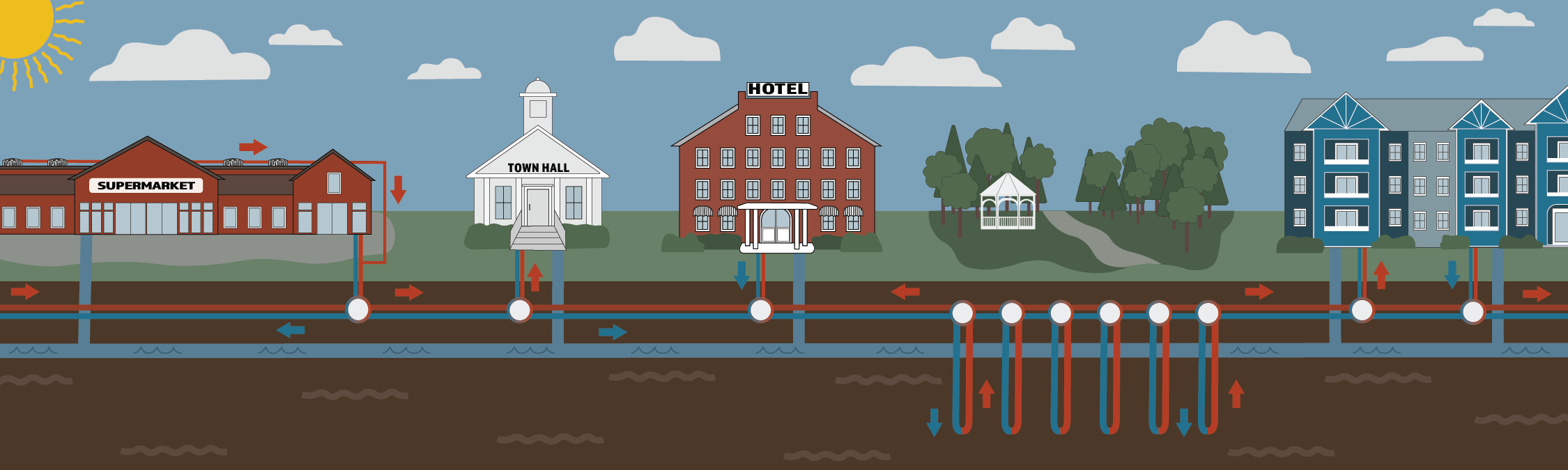
“Thermal Energy Network” describes heating and cooling systems that access, re-use, and share thermal energy among buildings.

This shared infrastructure uses pipes underground to both heat and cool buildings in a neighborhood or town center. Network pipes are installed at the same depth as water or sewer pipes and are connected to ground source heat pumps inside buildings.
Thermal energy can be drawn out of the earth, returned to the ground for storage, and balanced between buildings that have different heating or cooling needs.
Thermal Energy Networks can also capture existing waste heat from large refrigeration, building ventilation, or wastewater and share it among buildings in the network.
The more buildings that are linked to this shared system, the more affordable and efficient it gets.
This information is also available as a PDF: The Basics of TENs.
Thermal Energy Networks are already operational on college campuses and in communities across the country, including in Vermont.
Learn more about Thermal Energy Networks in Vermont and ones that relate to Vermont’s climate and local conditions.
Watch our short videos
Learn the basics of geothermal heating and cooling and Thermal Energy Networks as well as how they can benefit us in Vermont.
Thermal Energy Networks are highly efficient.
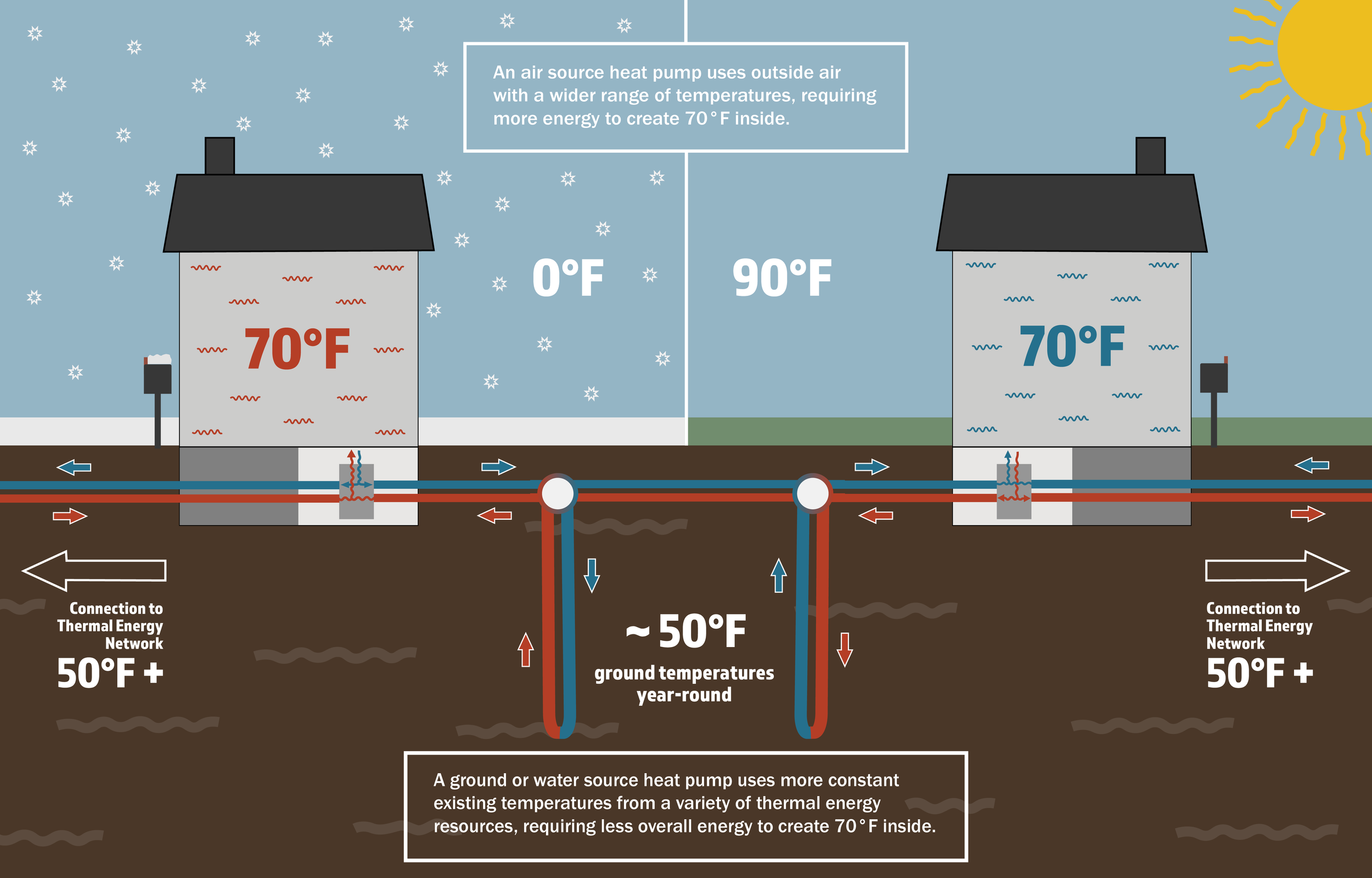
As we reduce our use of fossil fuels for heating, transportation, and more, our electricity use will increase, creating significant demand on our electric grid.
Thermal Energy Networks are the most efficient thermal systems we have. Since they use less electricity than other solutions, they can help lower peak electric demand, reducing the amount of new electric infrastructure we’ll need to build and making electric bills more affordable for everyone.
What do Thermal Energy Networks look like?
Not much! The equipment is installed underground and inside buildings, so the systems are practically invisible once built. Geothermal borefields can be installed under fields, parks, and parking lots, which can then be re-planted or re-paved. Distribution pipes are laid under streets and between buildings at about the same depth as water and sewer pipes. Inside buildings, heat pumps that are about the size of a standard water heater can be installed in basements, utility closets, or overhead, and are connected to a building’s ventilation system to distribute heating and cooling.


Horizontal pipes connect buildings at Smith College in Massachusetts and Oberlin College in Ohio.
These closed loop Thermal Energy Networks will heat and cool multiple buildings safely, affordably, efficiently, and reliably for decades to come.


Inside buildings, insulated pipes transport thermal energy between the building’s heat pump and the rest of the network. The size of the heat pump can vary, depending on whether it serves a commercial (center) or residential building (right).
In Vermont, we can build and benefit from our own thermal energy systems that are: